What’s Your Favourite Product? Why I Keep Coming Back to Fable
A product interview question that rewards genuine curiosity. Here’s what using Fable taught me about reading habits, personal libraries, and a more thoughtful AI-assisted review journey.
“What’s your favourite product?”
This is probably one of the most common questions you get asked in a Product interview.
I've always found it interesting because there really isn't a right answer. You can pick Spotify, Google Maps, Notion, Swiggy, WhatsApp, Airbnb, or pretty much any product you use regularly.
But I don't think what makes the question interesting is the product you choose. It's how well you know the product you're talking about.
Have you used it enough to notice the small things? Have you thought about why certain parts of the experience work? Do you have an opinion on what could be better?
For me, one product that I've ended up thinking about quite a lot is Fable.
I discovered Fable in September last year, when I decided I wanted to become more consistent with reading. I've been an avid reader since school, but I wanted some structure around it. I wanted to know what I was reading, what I wanted to read next, what I had finished, and whether I was actually making progress.
So I set myself a goal of reading 24 books this year and decided to use Fable to track that journey.
I've finished 19 so far, and somewhere along the way, Fable became much more than a place where I kept a list of books.
What pulled me in initially
The first thing I noticed was the overall feel of the product.
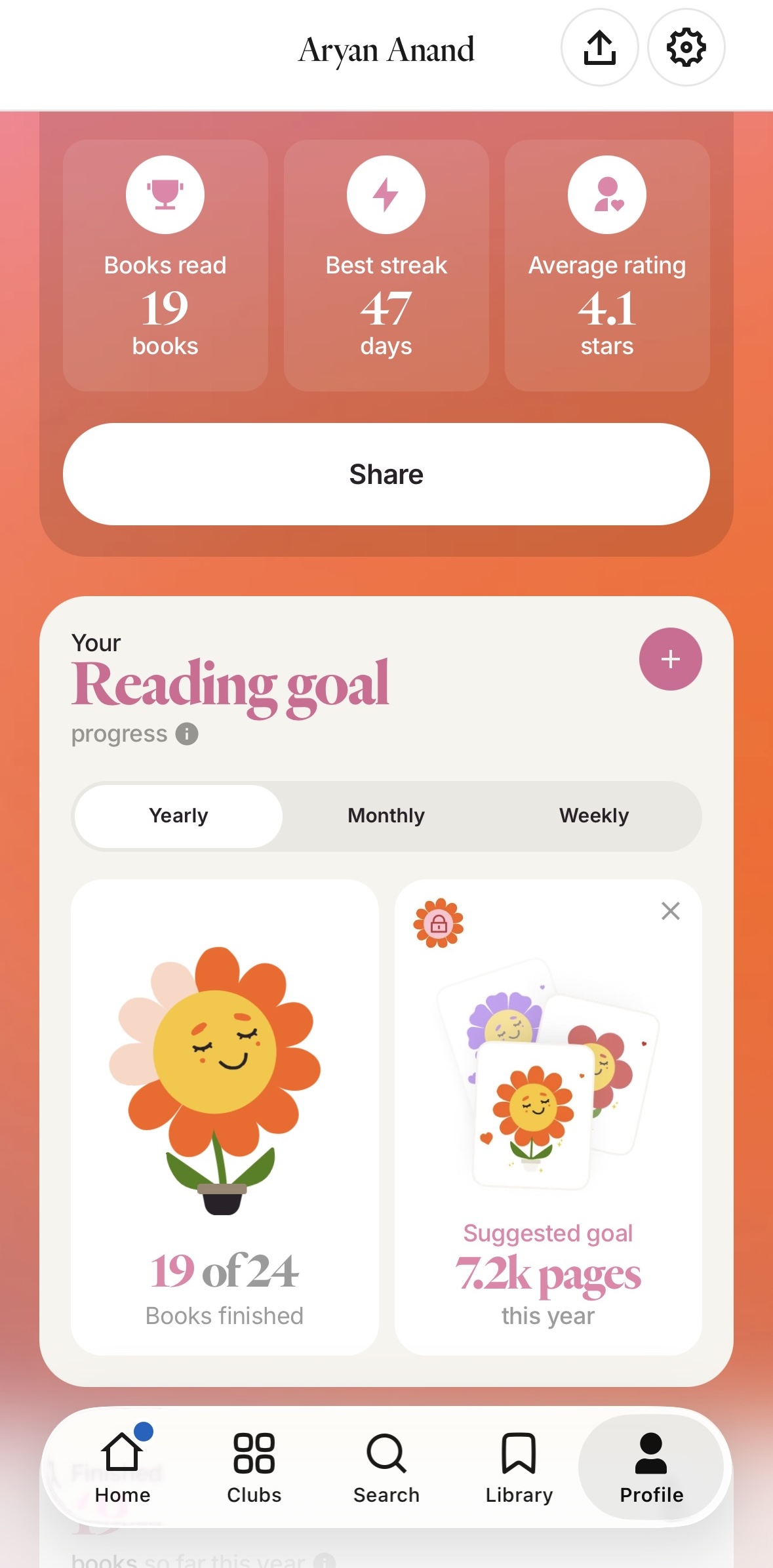
The UI is calm and intentional. There isn't a lot of visual noise, and it doesn't feel like the product is constantly trying to get my attention. That felt quite appropriate for something built around reading.
Even some of the smallest interactions feel thought through. I really like how easy it is to mark that I've read today. There's also a widget I can put on my home screen, so I don't even have to open the app to record it.
The app is quick to load, and the actual action of recording progress is almost effortless.
It sounds like a very small thing, but when you're trying to build a daily habit, I think that matters. Fable doesn't make me work to maintain the habit.
The deeper problem Fable solves is consistency
On the surface, Fable does all the obvious things you'd expect from a reading app.
I can have a Currently Reading list, a Want to Read list and a Finished list. I can search for pretty much any book I want, add it to a list and slowly build my own library.
What I like is that it doesn't feel like I'm maintaining a spreadsheet of books. It feels like I'm building a personal library. Seeing that collection grow makes maintaining my TBR surprisingly enjoyable.
But the thing that really changed my behaviour was the streak.
Once I started seeing the reading streak go up, I wanted to keep it going. I remember getting to two days and thinking, “Well, now I don't want to break this.” No wonder my best streak this year has been 47 days.
The same thing happened with the book I was currently reading. Seeing my progress move forward gave me a small sense that I was actually getting somewhere. I already wanted to read more before I started using Fable. Fable didn't create that desire.
What it did was give me a way to see myself making progress towards it. And I think that's a pretty powerful thing for a habit product to do.
Fable is slowly building a picture of me as a reader
The more I've used Fable, the more I've realized that reading progress is only one part of what the product is capturing.
My profile shows my monthly reading numbers, how I'm doing against my reading goal, the days I've actually read, my most-read genres, my average rating and my most-read authors. I can also get to my lists, clubs, reviews, posts and likes.
Initially, I looked at these as a bunch of useful features.
Over time, I started seeing them as something more interesting. They're building a picture of me as a reader.
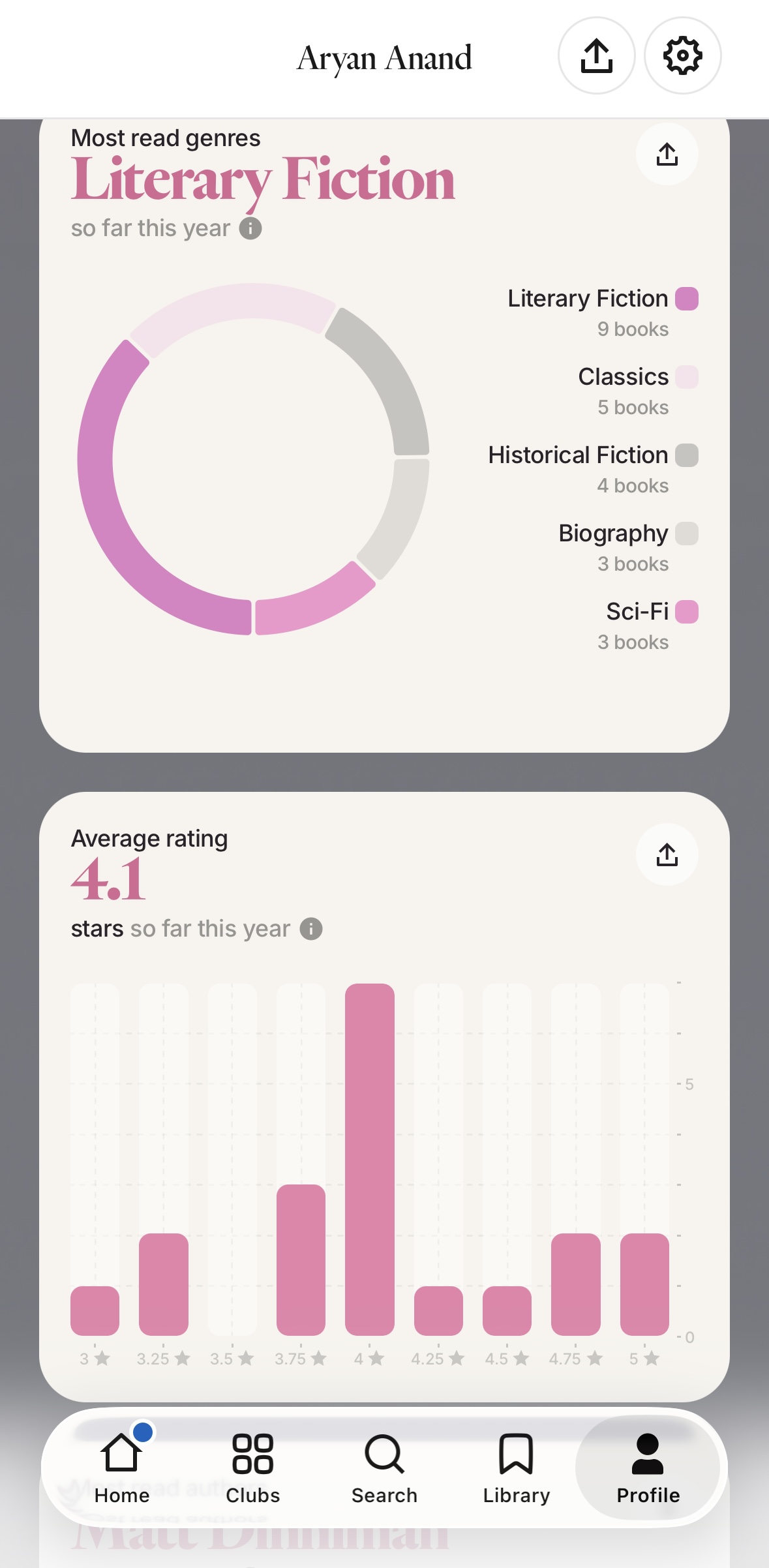
If I use Fable for another few years, my profile won't just tell me which books I've read. It could tell me what kinds of books I gravitate towards, which authors I keep coming back to, how often I read, what I tend to rate highly, and maybe even how my taste has changed over time.
A single rating tells Fable what I thought about one book. Years of reading history could tell it something much more interesting about me.
And then there is the social side. I can find clubs and communities around books, see what other people are reading, read reviews and posts, and interact with other readers.
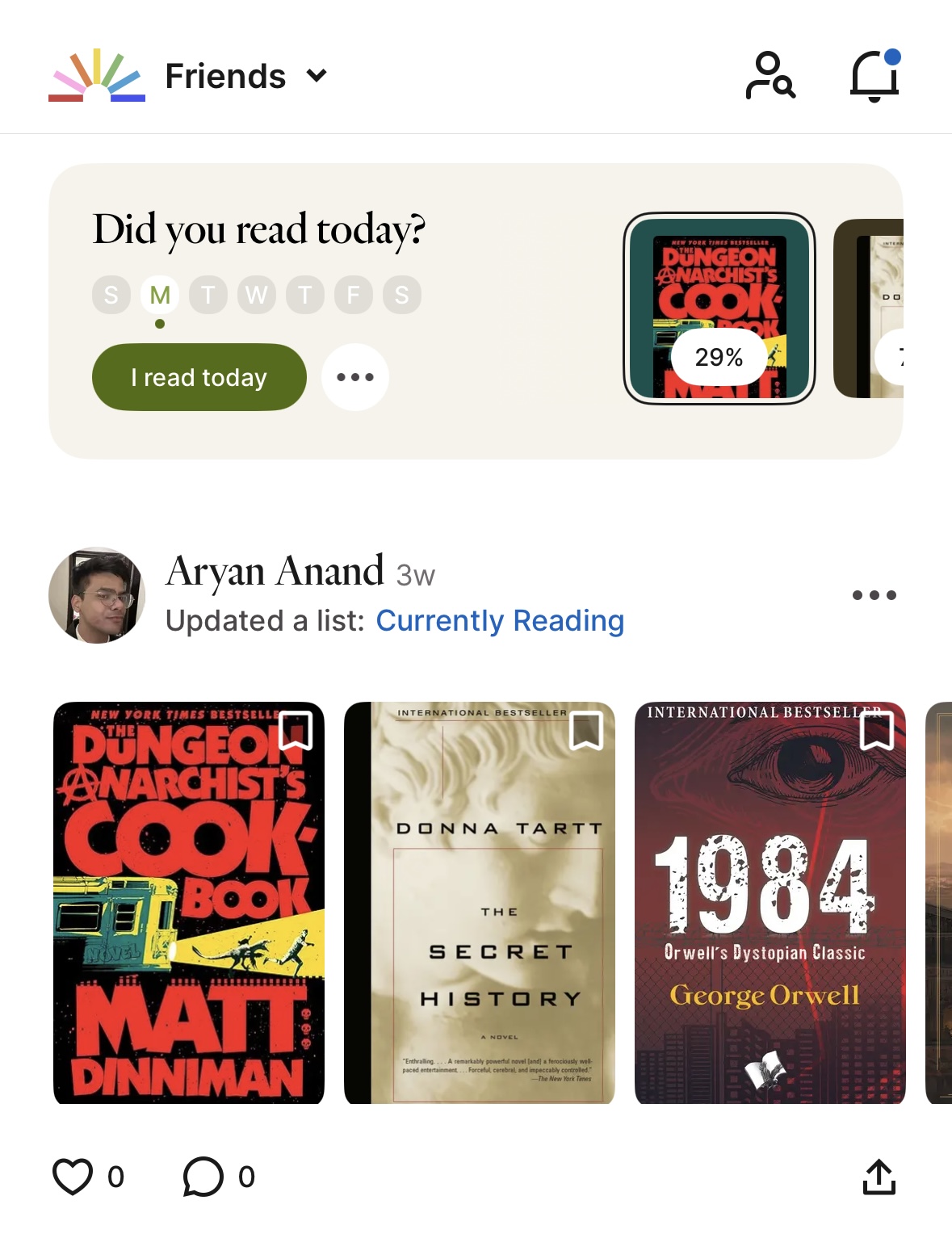
Fable is also where I can look up a book, see its rating, read spoiler-free reviews, find information about the author and then decide whether I want to add it to my list. The more I use it, the more Fable feels like a place I go whenever I have something to do with books — not just a place where I track what I've read.
There is one part of Fable that I think could be much better
This is probably the biggest product opportunity I've started thinking about after using Fable for a while. When I finish reading a book, Fable asks me to rate it: I can give it an overall star rating, rate aspects like the characters, plot and writing style, add trigger warnings, and write a review. It's a perfectly reasonable flow, but I've started wondering if we're asking the user to do all of this at the wrong time.
Most of my thoughts about a book don't happen at the end; they happen while I'm reading. I might really like a character at 20%, have a question about something that happened, love the writing in one chapter and find the next few slow. I might make a prediction, come across a sentence I love, or completely change my opinion about a character by the time I finish. But most people aren't annotating all of this. I'm certainly not.
So when Fable asks me to write a review, I'm trying to remember what I felt over the last few weeks, and that's not always easy. I think there's an opportunity for Fable to treat a review as something that builds throughout the reading journey, rather than something that happens after it's over.
As I mark my reading progress, Fable could occasionally offer a lightweight way to capture what's on my mind: a thought, a question, something I loved, or something that annoyed me. And sometimes I might not write anything at all. I wouldn't want this to become another habit I'm forced to maintain; reading shouldn't feel like filling out a productivity tracker. But when I do want to capture something, Fable could make it easy.
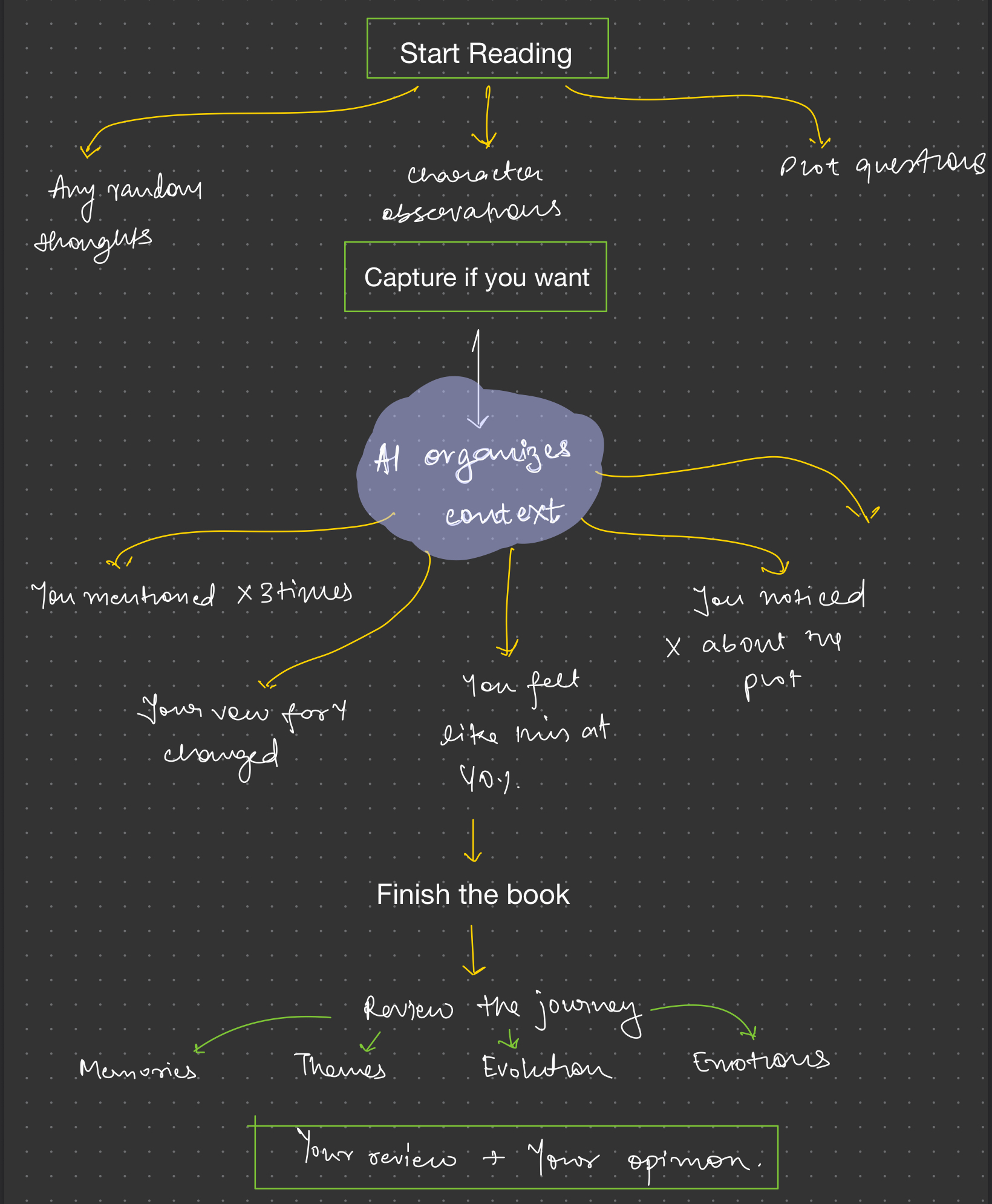
Then, when I finish the book, I could revisit those little thoughts instead of opening a blank review box and trying to remember everything. This is where I think AI could be genuinely useful. I don't want an AI to write a generic five-star review for me; I'd much rather have it help me remember what I thought by organizing the notes I've captured along the way.
It could show me that I mentioned a character several times, remind me of a question I had halfway through, or trace how my thoughts about the protagonist changed. Then I can decide what I actually want to say. The AI isn't replacing my opinion; it's helping me reconstruct my own reading experience.
And honestly, that's something I might actually pay for.
Where I think Fable could go
If I think about Fable five years from now, I don't see it as just a reading tracker.
I see the potential for it to become a personal book and reading platform — a place to discover books, understand what other readers think, find communities, track my reading and, eventually, understand my own reading taste.
The interesting part is the context Fable can accumulate over time: what I read, what I liked, what I abandoned, the authors and genres I return to, and even the thoughts I have while reading.
If Fable can understand not just what I like but why I like it, recommendations could become much more personal.
That's where I see AI fitting in. Not as an AI layer added for the sake of it, but as a way to connect all of this context and make discovery and reflection better.
Eventually, Fable could become a personal smart library — something that doesn't just track my reading history, but reflects my taste, curiosity and how they evolve over time.
Coming back to the interview question
So, what's my favourite product?
I don't think Fable is my favourite product because I think it's perfect. In fact, one of the reasons I enjoy talking about it is because I can think of quite a few things I'd change.
I've used it long enough to notice the tiny interactions that make me want to come back, how something as simple as a streak can change my behaviour, and where the product falls short for me.
More importantly, I've started thinking about why those things work and what I would build if I were responsible for taking the product forward.
And maybe that's what makes the “What's your favourite product?” question interesting for a Product Manager.
You don't necessarily need to pick the most sophisticated product in the world, or the product with the most impressive technology behind it.
Pick something you genuinely use. Use it enough to notice the small things. Pay attention to why a particular interaction feels effortless, why something changes your behaviour, or why something that should work better doesn't.
For me, that's probably where product thinking starts.
Not with a framework or a perfectly structured product teardown, but with simply paying enough attention to something you use.